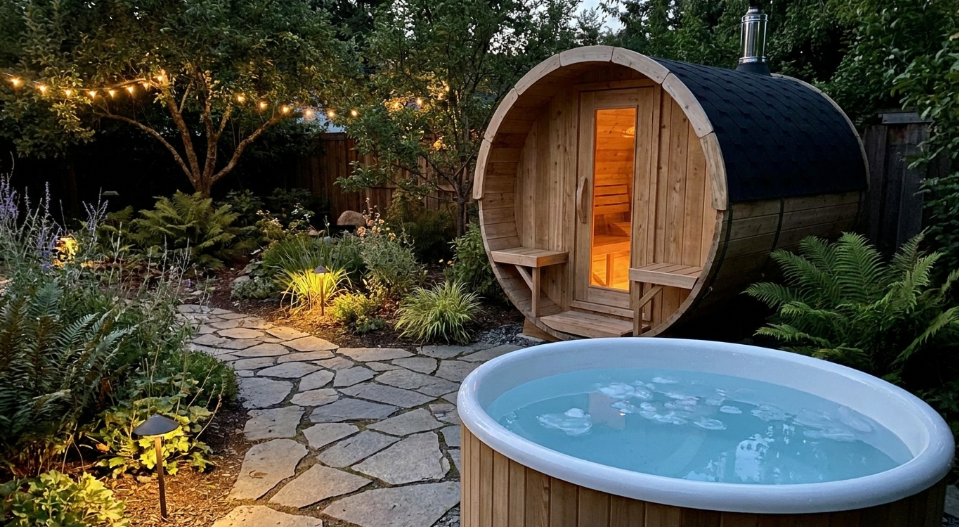
For two people using a sauna daily, the best setup is a compact 5 by 7 foot or 6 by 6 foot cedar or spruce cabin with a two-tier bench, an electric heater sized for fast recovery between sessions, and enough clearance to run comfortably at 174 to 194 degrees Fahrenheit. Frequent, moderate sessions are the pattern most closely tied to the cardiovascular research on sauna use, so the setup matters less than consistency.
Why Frequency Matters More Than Anyone Expects
Large Finnish cohort research has found that men who used a sauna four to seven times a week had a lower rate of fatal cardiovascular events compared with men who used one once a week, an association that held up even after adjusting for other lifestyle factors. This is observational data, meaning it shows a correlation rather than proof that sauna use alone causes the difference, but the pattern is consistent enough across multiple studies that frequency is treated as the more important variable than any single session’s intensity.
A review in Mayo Clinic Proceedings summarizing this body of evidence found associations between regular sauna bathing and lower risk of several cardiovascular outcomes, alongside reported benefits for mood and perceived relaxation. None of this amounts to a guarantee for any individual, and the studies mostly reflect a Finnish population with a lifelong sauna habit, but it is the best available evidence for why a small, frequently used sauna can be worth prioritizing over a larger one used rarely.
Sizing the Cabin for Two Daily Users
A 5 by 7 foot interior with a lower bench at about 18 inches and an upper bench at 36 to 42 inches gives two people room to lie down or sit comfortably, which matters more for a household using the sauna most days than it would for occasional guests. Smaller footprints also heat faster and hold temperature more efficiently, which reduces the electricity or wood needed per session, an important detail when the sauna is running several times a week rather than a few times a month.
Choosing a Heater That Can Handle Daily Cycling
A heater rated close to the correct kW-per-cubic-foot ratio for the cabin, rather than oversized, will cycle more efficiently under frequent use and put less wear on the heating elements over time. Electric heaters tend to suit daily users better than wood-fired stoves simply because there is no fire to build and tend before each session, which adds up over months of regular use. Rocks should be inspected periodically for cracking, since frequent heat cycling breaks them down faster than occasional use.
Session Length and Temperature for Regular Use
Most of the research behind the cardiovascular associations involves sessions in the 15 to 20 minute range at temperatures roughly between 174 and 194 degrees Fahrenheit, sometimes taken as two shorter sittings with a cooldown break between them. Daily users often find this split pattern, one shorter session in the morning or evening rather than one long sitting, easier to sustain over months than a single marathon session.
What to Look for When Buying for Daily Use
For a sauna that will see near-daily use, prioritize solid kiln-dried construction, a heater rated for the cabin’s exact volume, and easy access to spare rocks and heating elements, since replacement parts matter more when a unit is running constantly. Reading spec sheets carefully before buying saves headaches later; the team at SweatDecks lists heater wattage and interior cubic footage together on their product pages, which makes matching a heater to a small daily-use cabin more straightforward than guessing from a generic size chart.
Handling Two Different Heat Tolerances in One Cabin
It is common for two people sharing a daily sauna to have different heat preferences, and a two-tier bench layout is the simplest way to accommodate that without buying two saunas. The lower bench typically runs 15 to 20 degrees cooler than the upper bench in a well-designed cabin, since heat naturally stratifies toward the ceiling. A partner who prefers a gentler session can stay low while the other sits higher, and both still get a genuine sauna experience from the same room and the same heating cycle, without either person having to compromise on temperature for the sake of the other.
Wear and Tear From Daily Humidity Cycling
A cabin used daily goes through far more heat and humidity cycles per year than one used occasionally, which puts more stress on wood joints, bench fasteners, and the vapor barrier behind the paneling than an infrequent-use cabin ever sees. Checking bench fasteners for looseness every few months and watching for any soft or discolored spots on the lower wall, a sign moisture is getting past the vapor barrier, catches small problems before they become expensive repairs. Cabins built with tightly fitted, kiln-dried joinery hold up to this kind of daily cycling noticeably better than budget kits with looser tolerances, which is worth factoring into a purchase decision when daily use is the plan from day one rather than an occasional treat. A brief wipe-down of the benches after each session, letting the door stay open for ten to fifteen minutes to air the room out, extends the life of the wood finish considerably and takes only a minute of the routine already built around daily use.
Frequently Asked Questions
Is it safe to use a traditional sauna every day?
Daily sauna use is common in Finland and appears frequently in the research linking frequency to cardiovascular outcomes, but it is not appropriate for everyone. People with unstable angina, a recent heart attack, or who are pregnant should get medical guidance before starting a daily habit.
What size sauna is right for two daily users?
A 5 by 7 foot or 6 by 6 foot interior with a two-tier bench gives two people enough room to sit or recline without crowding, and is small enough to heat efficiently for frequent short sessions.
How long should a daily sauna session last?
Most research on frequent sauna bathing involves sessions in the 15 to 20 minute range at temperatures around 174 to 194 degrees Fahrenheit, sometimes split into two shorter sittings with a cooldown between them.
Does a heavier-use sauna need a stronger heater?
Not necessarily stronger, but a heater sized correctly for the cabin’s cubic footage matters more when it is running daily, since an undersized unit under constant use wears out faster and recovers heat more slowly between sessions.
References
- Cardiovascular and Other Health Benefits of Sauna Bathing: A Review of the Evidence, Mayo Clinic Proceedings, 2018.
- Clinical Effects of Regular Dry Sauna Bathing: A Systematic Review, Evidence-Based Complementary and Alternative Medicine, 2018.
- Does the Combination of Finnish Sauna Bathing and Other Lifestyle Factors Confer Additional Health Benefits? A Review of the Evidence, Mayo Clinic Proceedings, 2023.
- Effects of heat and cold on health, with special reference to Finnish sauna bathing, American Journal of Physiology – Regulatory, Integrative and Comparative Physiology, 2018.