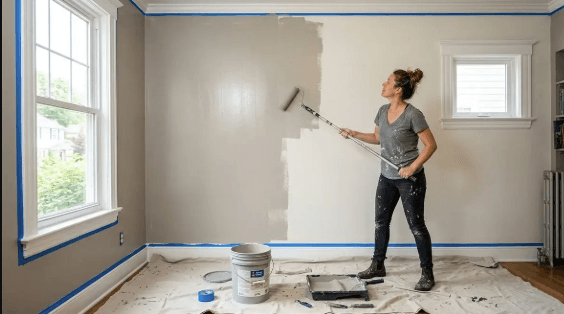
A pro approach to painting a room centers on a controlled palette and durable finishes. The process begins with selecting colors that suit the light and mood, then choosing sheen and primer needs. Surfaces are cleaned, defects fixed, and edges scored before a single stroke begins. Precise cutting in and steady, even coats follow, with attention to drying times. When questions arise, the root cause becomes the guide, keeping swatches close as the project progresses toward a quiet, lasting result.
Identify Your Paint and Prep Needs
Choosing the right paint and preparing surfaces correctly set the foundation for a flawless finish.
A color-centric assessment identifies desired ambiance and the room’s lighting behavior. The choice hinges on sheen, durability, and color matching possibilities. Surface prep is decisive: remove grime, fix defects, and ensure a smooth canvas. This precise groundwork frames cohesive color harmony and lasting results.
Master Cutting In and Edge Work for Clean Lines
Master cutting in and edge work demand deliberate precision, where the boundary between color and room defines the overall finish. Edge techniques guide clean transitions, selecting sharp brushes and steady wrists to frame ceilings, trims, and corners. The approach emphasizes trim precision, reducing seepage, and preserving adjacent surfaces. Resulting lines feel deliberate, cohesive, and liberating—an intentional boundary that enhances the room’s color story.
Apply Even Coats and Manage Drying Times
Smooth, even coats rely on consistent pressure and evenly spaced passes, building a uniform color field that sits cleanly on the wall. The guidance emphasizes even coats and mindful drying times, ensuring pigment settles evenly without drips. Precision in technique supports freedom in expression, while controlled drying times preserve color depth, minimize sheen differences, and sustain long-lasting, cohesive room aesthetics.
Troubleshoot Common Paint Problems Like a Pro
When problems arise on a painted surface, identifying the root cause quickly—aging substrate, improper priming, or incompatible finishes—enables precise, targeted remediation.
The guide analyzes common issues with a color-centric lens: uneven sheen, blistering, and peeling.
Solutions emphasize careful surface prep, compatible products, and methodical repaints.
Repainting brushes become instruments of control, while color swatches guide consistent, confident decisions.
Frequently Asked Questions
How Do I Choose the Right Primer for My Surface?
A prudent painter considers primer compatibility with the surface and ensures thorough surface preparation; choosing a primer tailored to the substrate minimizes bleed-through, improves adhesion, and yields cohesive color results while preserving freedom to express final hues.
What Tools Help Achieve a Perfectly Smooth Finish?
A whisper of foam glides, like wind over glass; tools for paint surfaces are sprayers, trowels, long sleeves, sanding blocks, and a quality roller. Spraying techniques demand patience, precision, and steady hands for a flawlessly smooth finish.
See also: Debugging Techniques for Developers
How Can I Prevent Lap Marks on Large Walls?
To prevent lap marks on large walls, one should employ preparing roller techniques and edge avoidance, maintaining steady pressure, overlapping strokes, and consistent wet-to-dry work. The approach remains color-centric, cohesive, precise, and freedom-oriented for painters.
Is Weather or Humidity Affecting Indoor Paint Drying Time?
A striking 78% rise in drying times occurs with high humidity. Weather impact and humidity effects slow evaporation, so rooms linger longer. The note emphasizes color-centric planning, cohesive timing, and precise adjustments for an audience craving freedom.
Can I Repaint Without Sanding Between Coats?
Can I skip sanding, surface prep? In most cases, no; preparation still matters for adhesion and finish. The question’s tone remains color-centric, cohesive, precise, offering freedom while noting that skipping sanding risks uneven texture and peeling later.
Conclusion
Painting with precision hinges on color logic and prep discipline. A cohesive palette, chosen for light and mood, guides every decision from sheen to finish. Proper surface prep, priming when needed, and crisp cutting in deliver clean edges that hold over time. Even coats, steady pressure, and mindful drying times yield durable results. One striking stat: using the right primer can improve coverage by up to 30%. Swatches reused ensure color harmony across walls, trim, and accents.