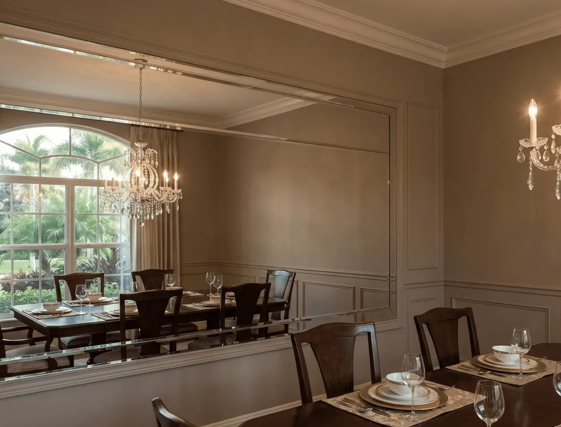
The dining room often brings together a table, chairs, lighting, artwork, and decorative details within a relatively defined area. A carefully selected mirror can give these elements more visual space while adding another layer of style to the room. Decorative mirrors for dining room interiors can reflect light, complement furniture, and create a stronger focal point without taking up valuable floor space. The right design depends on the room’s proportions, existing finishes, and the effect you want the wall to create.
Start With the Dining Room Layout
A mirror should work with the existing arrangement rather than compete with it. Begin by considering the dining table, chairs, sideboard, windows, doors, and lighting fixtures.
The wall behind the dining table is often a natural location because it provides a broad surface that can support a larger decorative piece. A mirror can also work above a sideboard or along a wall opposite a window.
Measure the available wall before choosing a mirror. A design that is too large can overwhelm a smaller dining area, while one that is too small may appear disconnected from the furniture below it.
See also: Social Media in Modern Life: Benefits, Challenges, and Responsible Use
Create More Visual Depth
Mirrors can make a dining area feel more spacious by reflecting parts of the room. This effect is particularly useful in smaller dining rooms where walls can otherwise feel close together.
A mirror positioned to reflect an open section of the room can add depth without making the space physically larger. Reflections of attractive furniture, plants, artwork, or lighting can also add interest to the wall.
The reflection should be considered before installation. A mirror facing a cluttered storage area may make the room appear busier rather than more open.
Match the Mirror to the Dining Table
The dining table is usually the main piece of furniture in the room, so its shape can provide a useful reference for selecting a mirror.
A rectangular mirror can complement a long dining table and reinforce the room’s horizontal lines. Round mirrors can soften the appearance of tables and chairs with strong edges. Oval designs provide a similar curved quality while offering a taller profile.
Consider the following relationships:
- Round mirrors can balance angular tables and cabinetry
- Rectangular mirrors can complement long dining tables
- Arched designs can add architectural character
- Slim frames can suit simple dining furniture
- Decorative frames can support more traditional interiors
The mirror does not need to match the table exactly. A connection through shape, finish, or proportion is usually enough to make the arrangement feel cohesive.
Use Lighting to Your Advantage
Lighting has a major effect on how a dining room mirror looks. Pendant lights, chandeliers, wall sconces, and natural daylight can all appear in the reflection.
A mirror placed near a window can distribute daylight across the room. Positioning it near a decorative light fixture can also make the fixture more prominent.
However, direct reflection from a strong light source can produce glare. Check the proposed position from different seats around the table before installation.
A few details deserve attention:
- Direction of natural daylight
- Position of pendant or ceiling lights
- Height of wall sconces
- Reflections visible from dining chairs
- Glare during evening meals
- Shadows cast by nearby furniture
Small changes in positioning can make the reflected light more comfortable and attractive.
Think About the Wall Behind the Table
A large empty wall behind the dining table can make the room feel unfinished. A mirror provides a way to fill that space without introducing another piece of furniture.
The width of the mirror should relate to the table and surrounding wall. A very narrow mirror above a wide table may look undersized, while an extremely wide design can dominate the wall.
Leave enough space around the mirror so that it remains visually distinct. The surrounding wall should provide some breathing room rather than making the mirror appear tightly boxed in.
Consider a Mirror Above a Sideboard
Sideboards and buffets are common dining room features, and their height often makes them suitable for a mirror arrangement.
A mirror above a sideboard can create a focal point while reflecting decorative objects placed on the furniture. Lamps, vases, bowls, books, and artwork can all contribute to the reflection.
Keep the decoration restrained. Too many objects underneath a mirror can produce a crowded reflection, particularly in smaller dining rooms.
The height should also be comfortable for viewing. A mirror mounted too high may lose its connection with the sideboard and surrounding furniture.
Choose the Frame Carefully
The frame contributes to the overall character of a dining room. Metal frames can introduce a crisp, contemporary detail, while timber finishes can create warmth. Ornate frames may suit rooms with traditional furniture and decorative architectural elements.
Frameless mirrors offer another option for interiors that rely on clean lines. They allow the glass itself to remain the main visual feature and can make the wall feel less visually heavy.
Look at the other finishes in the room before deciding. Matching the frame to every item is unnecessary, but repeating a finish used elsewhere can create a natural connection.
Pay Attention to Dining Room Proportions
Proportion is often more noticeable with mirrors because their reflective surface draws attention. The ceiling height, wall width, table size, and surrounding furniture should all be considered together.
A tall mirror can emphasise ceiling height, while a wide horizontal design can reinforce the width of a dining room. In a compact space, a lighter design may prevent the wall from feeling overloaded.
Furniture placement matters too. Chairs should have enough clearance from the mirror and wall, especially in dining areas where people regularly move in and out of their seats.
Installation Deserves Care
Large mirrors require more than a suitable location. Their size and weight mean that the wall and fixing method need to be considered before installation.
Different wall surfaces may require different hardware. The condition of the wall, mirror dimensions, mounting position, and surrounding furniture can all affect the installation process.
Luxurious Glass LLC can assist with residential mirror projects where accurate measurements, appropriate glass selection, and secure installation are required.
Professional installation can also help achieve cleaner alignment, particularly when a large mirror needs to sit precisely above a dining table or sideboard.
Keep the Reflection Looking Good
A dining room mirror can collect fingerprints, dust, cooking residue, and other marks over time, particularly when it is positioned near an open-plan kitchen.
Regular cleaning keeps the reflective surface clear. Use a soft cloth and a suitable glass-cleaning product rather than abrasive materials that could damage the surface or frame.
Pay attention to the edges as well. Excess moisture around mirror edges can cause problems over time, so cleaning should be controlled rather than overly wet.
Give the Room a Finished Appearance
A mirror can do more than fill an empty wall. Its shape, frame, size, and placement can influence how the dining room relates to its furniture and lighting. A large mirror can add depth to a compact room, while a carefully framed design can provide a strong decorative feature above a table or sideboard.
Before choosing a piece, study the wall from different angles and consider what the mirror will reflect during both daytime and evening use. The most successful placement usually feels connected to the room rather than added as an afterthought. Contact us today to discuss your dining room mirror requirements and find an option suited to your space, furniture, and interior style.